PAT
Patong Seaboard Redevelopment
Urban Design and Planning
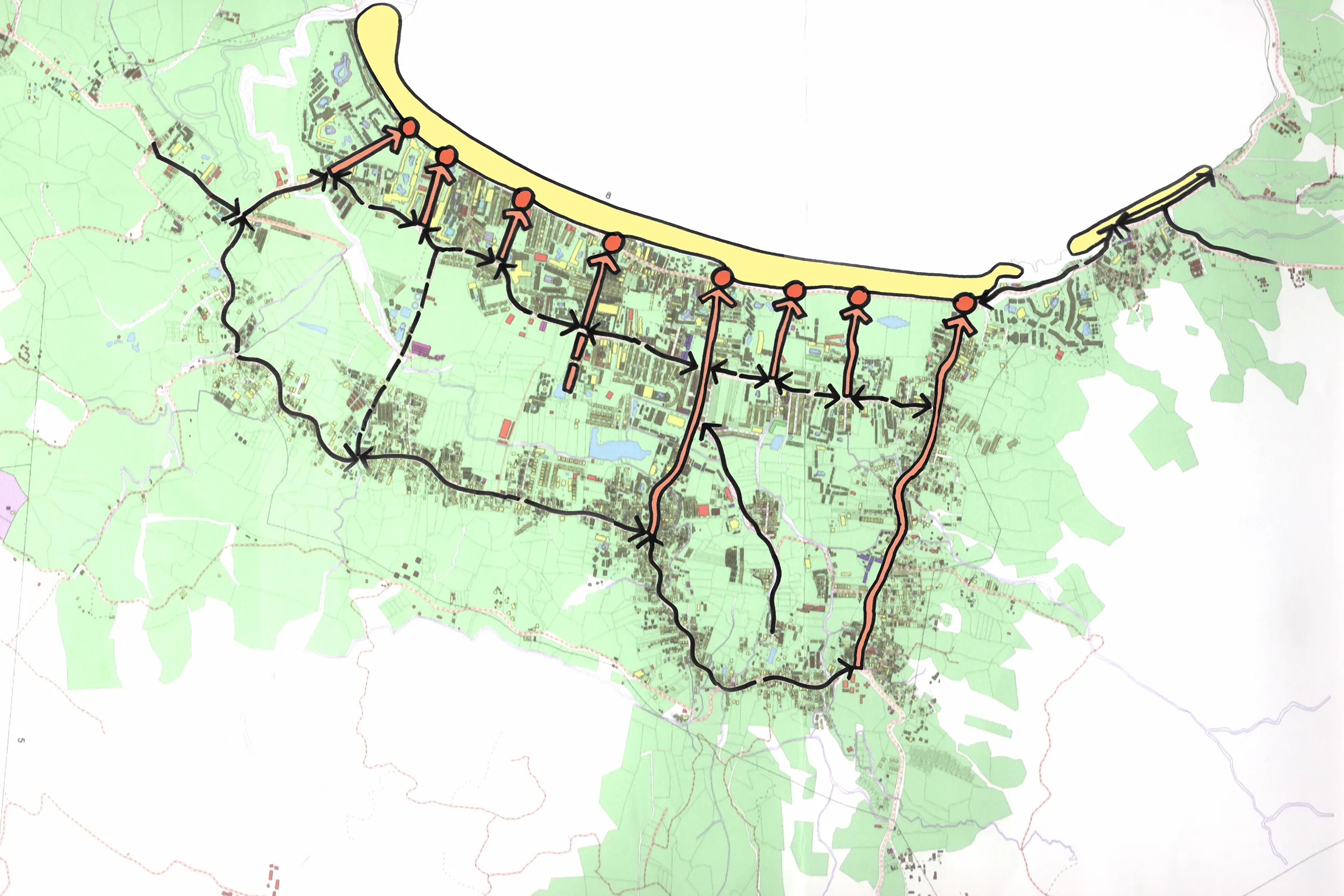
The design team was given the unique and very special opportunity to be involved in the initial conceptual planning for the redevelopment of Phuket, Thailand’s main tourist beach community, the Patong Seaboard, following the Boxing Day tsunami of 2004. Within less than three weeks following the tragedy, the design team, led by Sindhu-Maunsell Engineers and SPC Architects in Bangkok, had helped the Thai Government develop strategies and ideas not only to rebuild the devastated area in a physical sense but also to improve public safety, the future economic development framework, and landscape schemes that serve to provide shelter and means of escape from future disastrous situations. Since no plan could hope to accurately anticipate and prevent natural disasters of such magnitude (“tsunami-proof”), the conceptual plan seeks to ameliorate the effects of future powerful waves (“tsunami-safe”) by abating the penetration of dangerous wave volumes inland, allowing for controlled egress and wayfinding out of or to beach areas, and preventing as much as possible the break-up of structures and hardscape elements that may become hazardous projectiles in the water. Integrated simultaneously into this framework are design solutions that serve to maintain free and public access to the beach and water. It is hoped that the Patong Seaboard Redevelopment Plan can help to guide the Thai Government in re-establishing Phuket as the premier tourist destination in Southeast Asia in a manner that is economically, socially, and ecologically sustainable and safe.
MYC

QHW